
If you’re planning a new heating and cooling installation or considering replacing an aging system, cost is probably one of your biggest concerns. While a traditional HVAC system is often less expensive to install, a geothermal HVAC system in Nashville, TN may provide substantial long-term savings for the right property. Understanding how these systems compare can help you make a smart investment for your home and budget.
Understanding the Difference
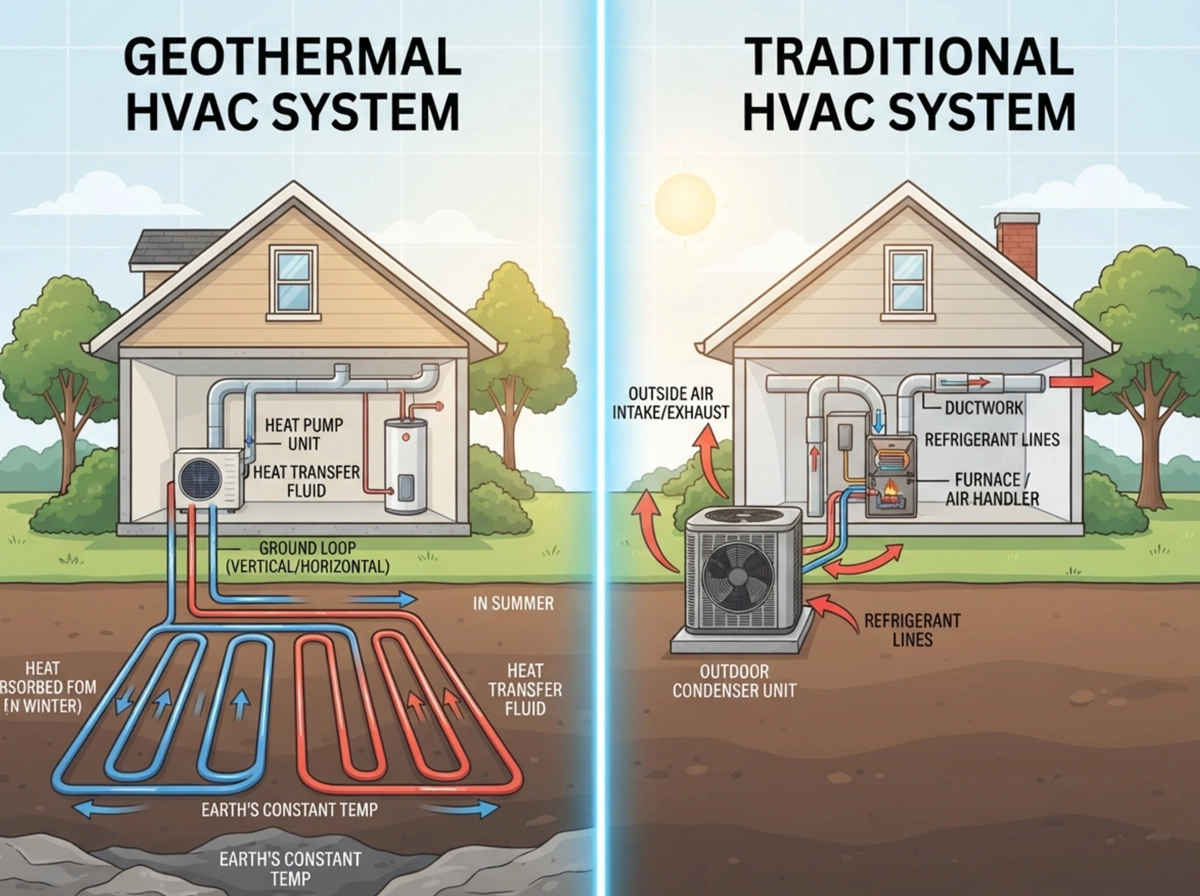
Traditional HVAC systems transfer heat between your home and the outdoor air. Because outdoor temperatures fluctuate dramatically throughout the year, these systems often work harder during extreme weather.
Geothermal systems operate differently. They use a network of underground pipes that take advantage of the earth’s relatively stable temperature below the surface. This allows the system to heat and cool your home more efficiently regardless of the season.
Comparing Upfront Costs
One of the biggest disadvantages of geothermal systems is the initial installation cost. In addition to the indoor equipment, underground loops must be installed, which requires excavation or drilling. This makes the upfront investment significantly higher than installing a conventional furnace and air conditioner or heat pump.
Traditional HVAC systems typically have lower installation costs and can often be installed more quickly, making them an attractive choice for homeowners with limited budgets or homes where geothermal installation may not be practical.
Long-Term Financial Benefits
Although geothermal systems cost more initially, they often deliver impressive savings over time. Their exceptional efficiency can significantly reduce monthly heating and cooling expenses compared to traditional equipment.
Geothermal systems also tend to have fewer exposed components affected by weather, which may reduce maintenance needs and extend equipment life. The underground loop system can last for decades, while the indoor components often have a longer lifespan than conventional HVAC equipment. Over many years, these lower operating and replacement costs can help offset the higher installation expense.
Depending on available utility incentives or tax programs, homeowners may also qualify for financial benefits that further improve the return on investment.
Pros and Cons at a Glance
Geothermal systems offer excellent energy efficiency, quiet operation, consistent indoor comfort, and lower utility bills. They also produce fewer greenhouse gas emissions, making them an environmentally friendly choice.
However, they aren’t the perfect solution for every property. Installation costs are higher, and factors such as lot size, soil conditions, and available space can affect whether geothermal is a practical option. Traditional HVAC systems remain a reliable, proven solution with lower upfront costs and easier installation.
Let Our Experts Help You Decide
Every home is unique, and the most cost-effective HVAC system depends on your property’s characteristics, your budget, and your long-term goals. Our experienced team can evaluate your home’s layout, energy needs, and existing equipment to determine whether a geothermal system or a traditional HVAC installation will provide the greatest value. Contact us today to schedule a consultation and receive expert guidance that helps you maximize comfort while making a wise financial investment for years to come.
Covenant Heating and Cooling is your trusted resource for reliable help with a geothermal HVAC system in Nashville, TN. We are “Dedicated to the Promise of Serving You!” Contact us today.